
There is a quiet fear moving through classrooms, staff meetings, family conversations, and even playgrounds. It is not always named out loud, but it shapes decisions every day. It sounds like: Don’t say anything. It’s safer to stay neutral. We can’t talk about that with children.
In the current political climate, many adults are choosing silence—not because they don’t care, but because they are afraid. Afraid of retribution. Afraid of being misunderstood. Afraid of losing a job, a license, a reputation, or a sense of safety. This fear is real, and it deserves to be acknowledged.
But children are watching the silence
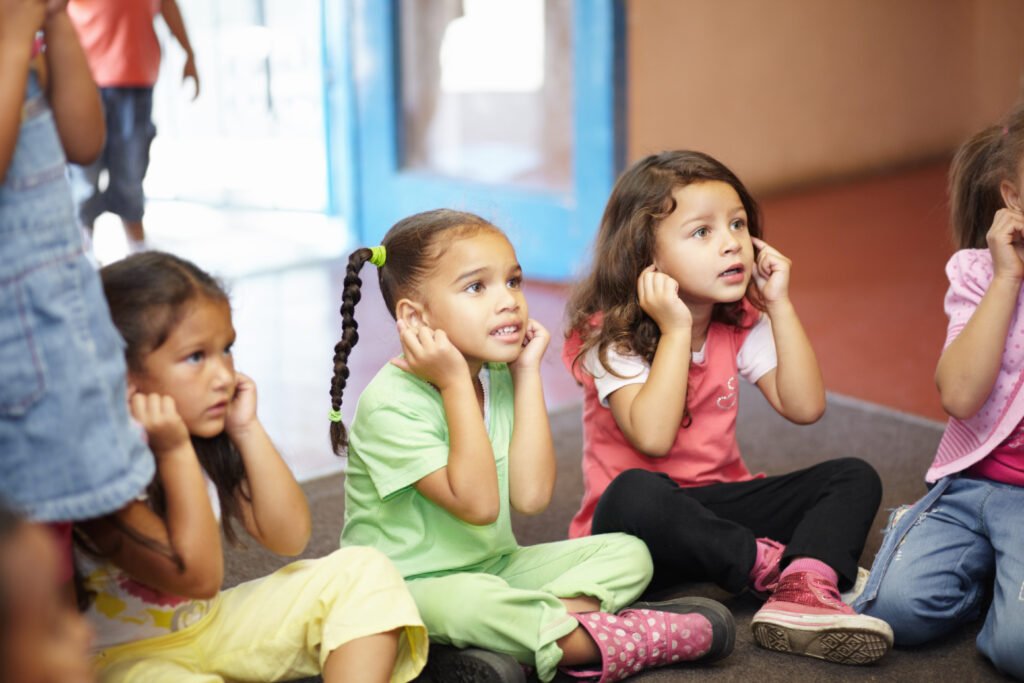
They are listening to snippets of news playing in the background. They hear adult conversations cut short when they enter the room. They notice tension in voices, changes in routines, and the emotional weight carried into shared spaces. Children may not understand policies, elections, or power structures—but they understand fear. And they understand silence.
Avoiding conversation does not protect children from the world. It protects adults from discomfort.
When we choose silence in the name of “keeping children safe,” we need to ask an uncomfortable question: Safe from what, exactly? From ideas? From emotions? From truth? Or perhaps it stems from our own uncertainty about how to respond?
Children are not harmed by honest, developmentally responsive conversations. They are harmed by confusion, by a lack of language, and by being left alone to make sense of what they are experiencing. When adults refuse to name what is happening, children are left to fill in the gaps with their imaginations—and those imaginings are often far more frightening than reality.
There is a difference between indoctrination and acknowledgement. There is a difference between imposing adult opinions and offering children a sense of grounding, reassurance, and agency. Silence collapses those distinctions, treating all conversation as dangerous rather than discerning what is necessary.
The tension we are living inside of is real:
If we speak up, there may be consequences.
If we remain silent, there are consequences too.
Retribution for adults may look like professional risk, social backlash, or institutional discipline. But the consequences for children are quieter and longer lasting. Children raised in environments where fear dictates conversation learn early lessons about power and voice. They learn that some things are too dangerous to name. They learn that safety comes from compliance rather than courage. They learn that discomfort should be avoided rather than explored.
Over time, silence teaches children not just what not to say—but who they are allowed to be.
When children do not see adults naming injustice, holding complexity, or standing in values with care and humility, they internalize a message: My questions are a problem. My worries are inconvenient. My voice is risky.
We cannot raise a generation capable of social justice while modeling fear as the primary response to uncertainty. Strength, resilience, and ethical courage are not inherited traits—they are practiced, observed, and nurtured over time. They develop when children see adults wrestle with hard moments, speak thoughtfully, listen deeply, and act with integrity even when it is uncomfortable.
Protecting children does not mean shielding them from reality. It means walking alongside them as they encounter it.
This requires a different kind of courage—one that is quieter than protest but no less powerful. It looks like choosing honest language without panic. It looks like answering children’s questions without overloading them. It looks like saying, “Some people are feeling scared right now, and it’s okay to talk about that.” It looks like acknowledging that unfairness exists while also affirming that children are not alone.
It also requires us to examine our fears. Not to dismiss them, but to ask whether they are guiding us toward our values or away from them.
Fear-driven silence may feel protective in the short term, but it has a cost. It narrows the emotional and ethical landscape children are allowed to inhabit. It limits their capacity to develop empathy, critical thinking, and moral clarity. It teaches them that safety comes from disappearance rather than participation.
To raise children who speak out against injustice, we must first let them grow up in welcoming environments. Where questions are considered signs of engagement, not threats. Where silence is a choice made thoughtfully, not a default shaped by fear.
Such an environment does not mean adults must have all the answers. In fact, modeling uncertainty may be one of the most powerful gifts we can offer. Saying “I’m still learning,” or “This is hard to talk about, but it matters,” teaches children that courage and humility can coexist.
We are always teaching through what we say and through what we avoid.
The question before us is not whether silence keeps children safe. The question is what kind of future silence prepares them for.
If we want a generation capable of justice, compassion, and collective care, we must begin by trusting children with the truth—offered gently, responsibly, and in relationship. This is not an easy task. However, we must speak up because it is essential.
Furthermore, fear should never be the legacy we leave behind.